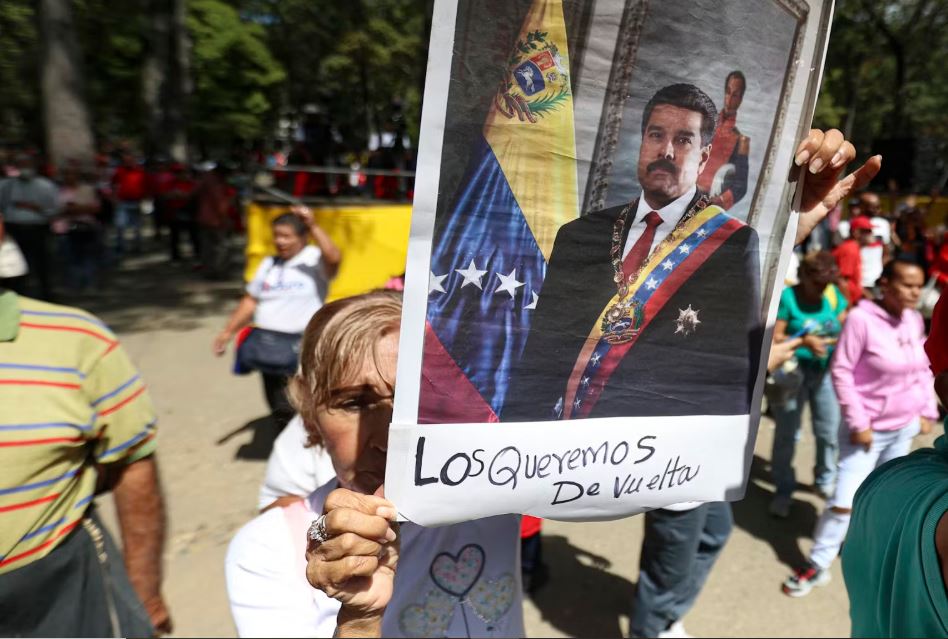
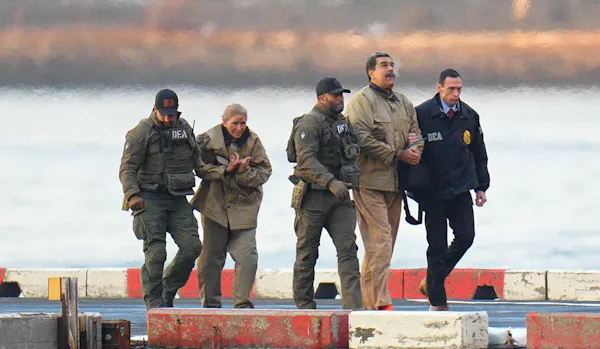
Many of our college freshman students will have seen and read about the Jan. 3, 2026, U.S. military operation in Venezuela that culminated in the arrest of its leader, Nicolás Maduro, and his wife, Cilia Flores. The U.S. has charged Maduro and Flores with conspiracy and drug trafficking. Maduro and Flores are imprisoned in New York City, awaiting trial.
Some freshmen this semester will likely say Maduro’s unusual arrest violates international law. Others may view it as a decisive step in the U.S.’s fight against narco-terrorism.
That’s in part because the U.S has no national curriculum, and high school history courses often rely on teachers’ discretion, even more so than in other content areas. This results in history being taught a lot of different ways across schools.
As scholars of Latin American history and history education in the U.S., we know that most American high school students learn about the ancient civilizations in Latin America and a few other key flash points in history.
But few, we suspect, will understand Maduro’s arrest as part of a long history of the U.S.’s interventions in Latin America, stretching back to the Monroe Doctrine in the 1800s. President James Monroe introduced this foreign policy in an 1823 speech, saying that the U.S. would not allow European colonization or interference in the Western Hemisphere.
A partial, skewed history
In high school world history courses, teachers in the U.S. often rely on case studies and examples to indicate historical trends.
High school students are likely to learn about the Inca, Maya and Aztec civilizations as representatives of pre-Columbian Latin America. They read about Spanish conquistadors such as Hernán Cortés, who overthrew the Aztec empire, and Francisco Pizarro, who conquered the Incas in the early 1500s.
They will learn about how most Latin American countries, including Mexico, Argentina, Colombia and Guatemala, gained independence in the early 1800s.
Often, students learn about these countries’ fights for independence, with the case example of the Haitian Revolution. They may learn about Simón Bolívar, the grand Venezuelan military officer and liberator who played a decisive role in the independence movements of countries including Venezuela, Colombia and Bolivia.